
 en
en
 Español
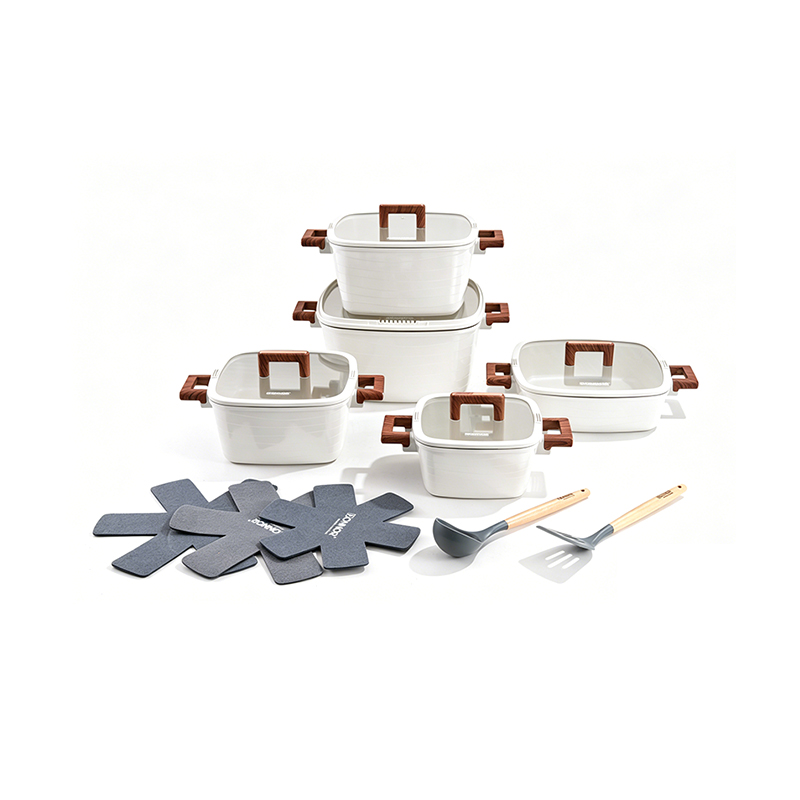
This cookware set features a non-stick coating, even heat conduction, and multi-...
See Details
Will a Modern Pots and Pans Set Fit Your Target Retail Price
Date:Oct 16, 2026
A retail price target can shape an entire cookware project, from product configuration to packaging design. Retailers may have a clear selling price in mind, but the challenge is determining whether the proposed materials, set composition, branding, and logistics can support that price while leaving sufficient room for business costs.
At ECHO Kitchenware, we work with buyers who need cookware solutions aligned with their market positioning and purchasing budgets. A modern pots and pans set should offer a suitable combination of appearance, functionality, and product specifications without creating an unsustainable cost structure. Before confirming a product plan, buyers should evaluate several factors beyond the initial factory quotation.
1. Start With the Target Retail Price
The intended selling price provides a practical starting point for product development. A set designed for a value-focused retailer may require a different configuration from one intended for a specialty kitchenware store or a premium online brand.
- Value retail: Focus on essential cookware pieces, practical construction, straightforward packaging, and specifications suited to everyday cooking.
- Mid-range retail: Consider coordinated designs, useful pan sizes, matching lids, attractive finishes, and packaging that communicates product value.
- Premium retail: Evaluate upgraded materials, specialized surface treatments, refined handle designs, detailed product documentation, and customized presentation.
These categories are planning references rather than fixed market rules. The appropriate configuration depends on the target customer, competing products, distribution channel, and expected selling price.
2. Calculate the Full Cost, Not Just the Factory Price
A factory quotation is only one part of the retail cost calculation. Importers and retailers also need to account for packaging, freight, customs charges, warehousing, sales commissions, and other channel expenses that apply to their business.
We recommend preparing a cost worksheet that includes the following items:
- Product cost: Cookware bodies, lids, handles, coatings, and included accessories.
- Packaging: Color boxes, protective inserts, printed materials, and export cartons.
- Import expenses: Freight, insurance, customs duties, clearance, and inland transportation where applicable.
- Sales expenses: Marketplace commissions, payment processing, fulfillment, and promotional discounts.
- Risk allowances: Expected costs associated with returns, transit damage, warranty claims, and replacement products.
For example, a retailer planning to sell a cookware set for $99 should not assume that a $30 factory quotation automatically creates a healthy margin. The actual result depends on the remaining costs and the retailer's required profit contribution.
3. Balance Set Composition With Perceived Value
The number of pieces in a cookware set can influence its price, packaging size, and appeal to shoppers. However, adding more pieces does not automatically make a set more attractive to its intended audience.
Our product planning recommendations include:
- Review whether the set includes useful combinations of frying pans, saucepans, stockpots, and compatible lids.
- Check whether included accessories provide genuine value for the target customer rather than adding unnecessary cost.
- Compare the total piece count with the available storage space and expected cooking requirements.
- Consider whether a smaller, carefully planned set can support the intended price point more effectively than a larger assortment.
Clear product descriptions also matter. Buyers should distinguish between the number of cookware vessels and the total number of pieces, which may include lids and utensils. This helps retailers present the set accurately and reduces confusion during purchasing.
4. Evaluate Materials and Construction Carefully
Material choice affects manufacturing costs, product weight, cooking characteristics, and retail positioning. Aluminum cookware is valued for its relatively low weight and heat conduction, while stainless steel and iron cookware offer different construction and cooking characteristics.
Several technical details deserve attention during quotation reviews:
- Body thickness: Confirm the specified thickness in millimeters where relevant. Differences in material use can affect weight, rigidity, and manufacturing cost.
- Surface finish: Compare the required finish, coating system, and appearance standards for the intended product.
- Handle construction: Review the handle material, attachment method, and applicable heat-resistance requirements.
- Cooktop compatibility: Confirm whether the product is designed for gas, electric, ceramic, or induction cooking.
- Food-contact requirements: Identify applicable destination-market regulations and obtain supporting documentation for the specified product.
At ECHO Kitchenware, we encourage buyers to compare equivalent specifications rather than evaluating quotations by price alone. A lower quotation may reflect differences in construction, included components, packaging, or documentation. Reviewing these details helps purchasing teams make a more informed comparison.
5. Decide How Much Customization the Budget Can Support
Private-label projects often require decisions about logos, colors, handles, coatings, printed packaging, and product combinations. Each additional requirement can affect development expenses, production arrangements, or unit cost.
To keep a project aligned with its retail target, we suggest separating customization requests into two groups:
- Essential requirements: Brand identification, required product specifications, market compliance, and packaging information.
- Optional enhancements: Special finishes, additional accessories, elaborate gift boxes, and design changes that are not essential to the product's market position.
Buyers can then request quotations for different configurations and compare the cost implications. Existing product designs may offer a practical starting point, while more extensive OEM or ODM development can be considered when differentiation justifies the additional investment.
6. Include Packaging and Freight in Product Decisions
Cookware sets can be bulky, and protective packaging influences both shipping costs and the condition of goods upon arrival. A visually appealing retail box must also protect lids, handles, and coated surfaces during transportation.
Before approving the packaging design, buyers should review carton dimensions, gross weight, protective inserts, labeling requirements, and the number of sets packed per carton. A revised box layout may improve packing density, but protection should not be reduced simply to save space.
We also recommend confirming whether individual sets require gift-ready packaging, e-commerce shipping protection, or standard retail cartons. Different sales channels may need different packaging arrangements, so these requirements should be established before the final quotation is accepted.
7. Use Samples to Confirm the Final Value Proposition
Cost calculations need to be supported by product evaluation. An approved sample allows the purchasing team to compare the actual cookware with the agreed specification and assess whether the proposed configuration fits the intended retail position.
- Check dimensions, weight, finish, and included components against the specification sheet.
- Review handle assembly, lid fit, and overall product presentation.
- Confirm packaging dimensions and the condition of the product after appropriate handling tests.
- Approve the final branding, labels, and product documentation before production confirmation.
Written sample approval also establishes a reference for later quality inspections. Any agreed changes should be documented so that the final goods match the purchasing requirements.
Build the Cookware Set Around the Retail Business Model
Matching a cookware set to a target retail price requires coordinated decisions about product composition, materials, customization, packaging, and distribution costs. The factory price matters, but the commercial result depends on how all these elements work together.
At ECHO Kitchenware, we help buyers review cookware configurations and discuss product options based on their intended markets, specifications, and branding requirements. Whether your project involves aluminum cookware, stainless steel designs, or customized retail sets, a clearly defined budget and product brief can make supplier discussions more productive.
Share your target retail price, preferred set composition, material requirements, packaging expectations, and destination market with our team. We can discuss suitable product options and quotation details to help you develop a cookware range that fits your commercial plans.
```
Recommended Articles
Product Category
Related products
-
-
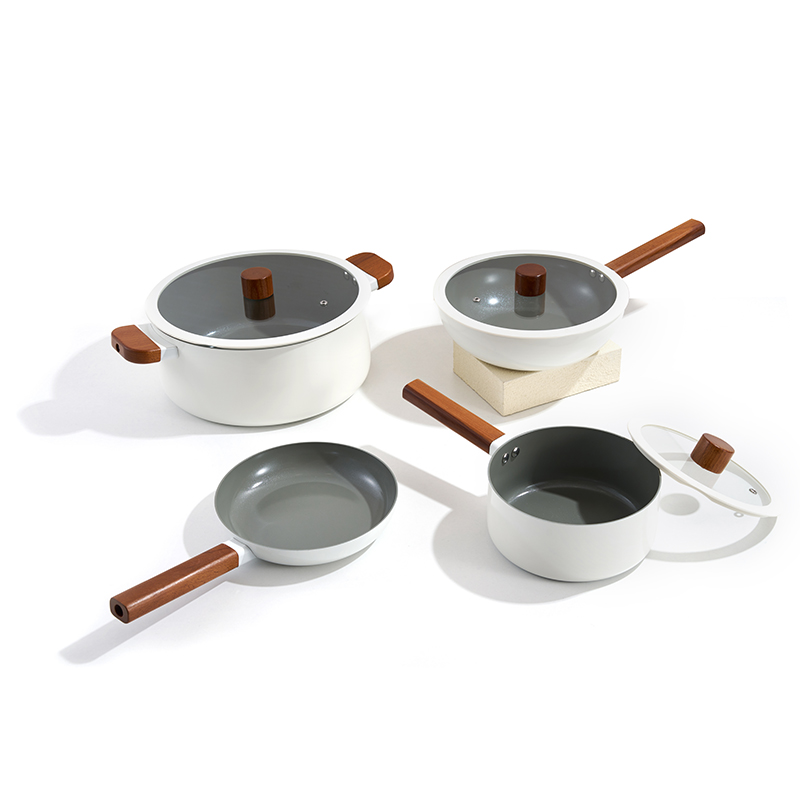
This cookware set has a ceramic non-stick inner liner, a heat-resistant wooden h...
See Details -
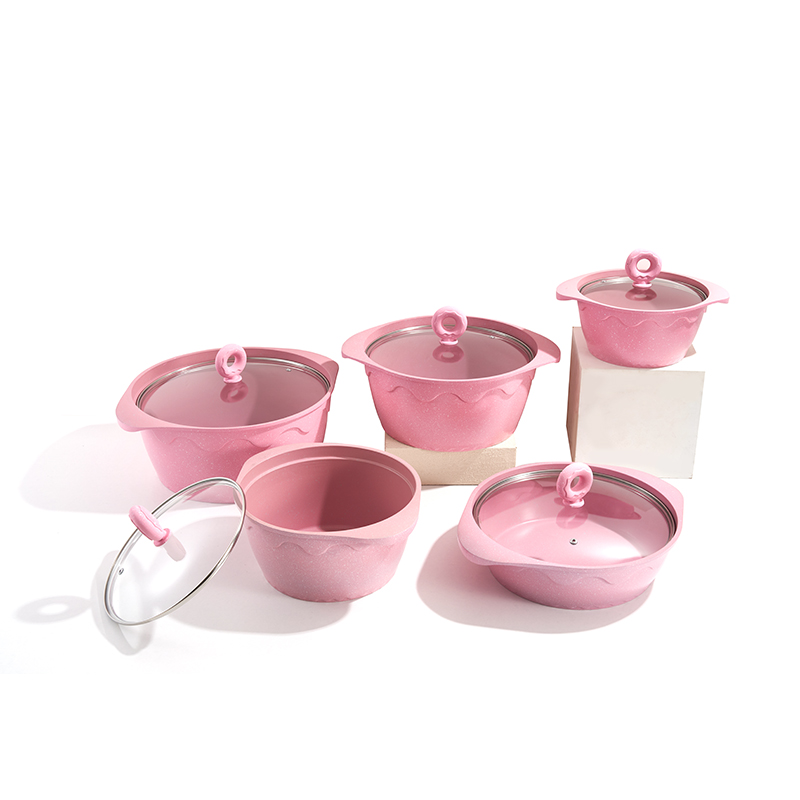
This cookware set is made of food-grade non-stick material, with a unique eye-ca...
See Details -
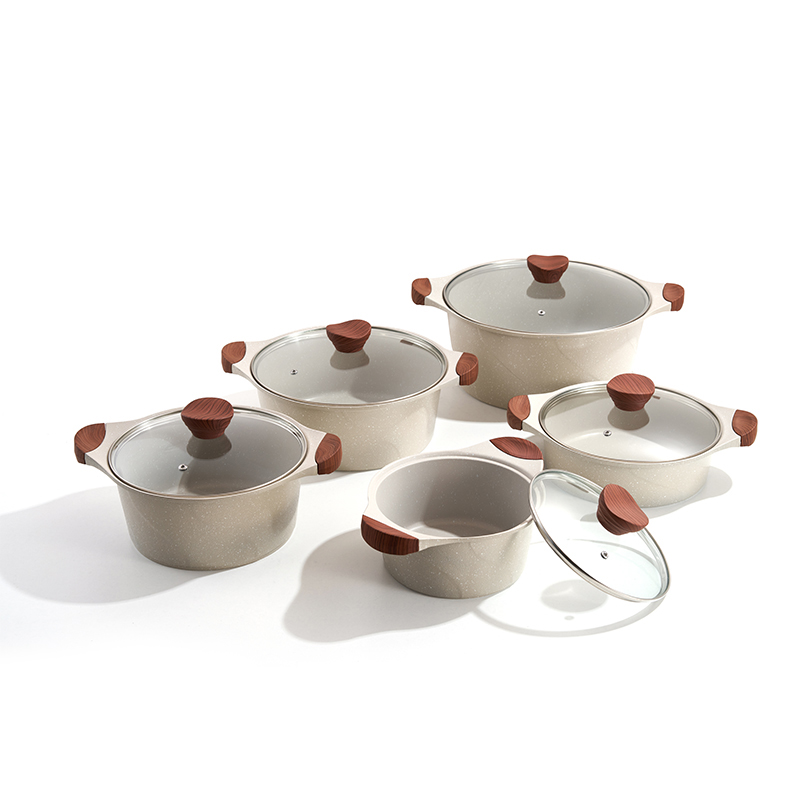
This off-white cookware set is made of wear-resistant non-stick material, with w...
See Details
Whether you're looking for bulk purchases or have any custom requirements, We are here to offer the best
solutions for you.
tiffany.zhong@echocn-trading.com
PHONE
+86-19561173975
+86-19557020621 (Hazel Wu)
ADD
Room 301, Unit 3014, No. 175 Qifeng Avenue, Wenqiao Town, Taizhou, Zhejiang, China
Fill Out the Form for More Information
Copyright © Zhejiang Echo Industry And Trade Co., Ltd.
All Rights Reserved.

China Cookware Set Manufacturer